
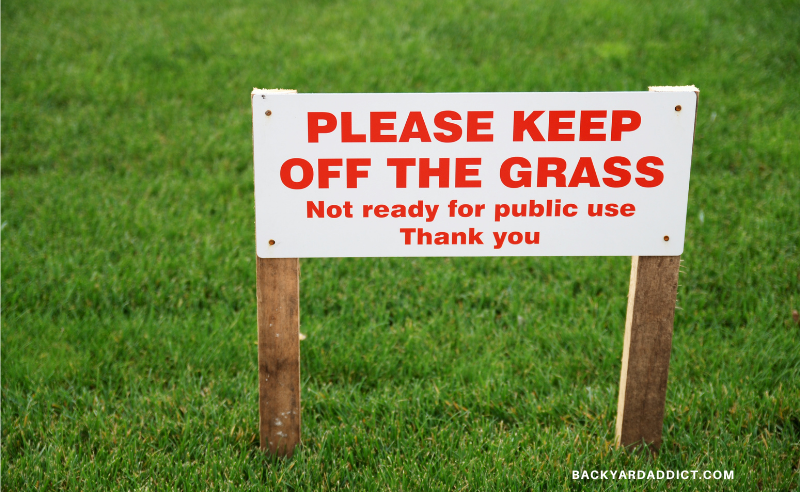
When Can You Walk on New Grass? Tips and Timeline
You’ve just had a new lawn installed, and you can’t wait to use it! But when can you walk on new grass? How long does it take? And when will it be fully grown? In this post, we’ll answer those questions for you. We’ll also provide a timeline for lawn growth. So read on to learn more!

When Can You Walk On New Grass?
Generally speaking, experts recommend waiting for a minimum of four weeks before walking on new grass. This gives the seedlings time to germinate and establish themselves in the soil. New grass seedlings are easily damaged and may be killed by foot traffic before they have had a chance to establish themselves.
If you are laying sod, the recommendation is to wait at least two weeks before walking on the lawn. This allows the sod to put down shallow roots and become stronger.
It’s also best to wait until the new grass has been mowed three to five times before exposing it to regular human and animal traffic. This will help the grassroots grow stronger and deeper, making them less likely to be damaged or uprooted.
Are you ready to learn more? Let’s dig a little deeper, and I’ll explain all the whys and wherefores.
How Long To Stay Off New Grass Seed?
You’ve seeded your lawn, and the grass is growing in. Now you may wonder when you can start using that lawn. The bottom line is that you don’t want to damage the new growth. So, keep your eye on the goal here, which is a healthy, thick lawn.
When can you walk on your lawn, and when do you need to stay off it? We’ve got three tips to help you get the best results when it comes to growing grass seed.
1. Stay off the lawn completely until the grass is at least 3 inches high.
This can take up to 8 weeks. The exact time depends on the type of grass, the soil conditions, weather, and the amount of water the seeds receive. Some grass species such as Bermuda and Kentucky Bluegrass can take up to 30 days just to germinate.
2. Let grass grow one and half times the recommended height before the first mow.
It is crucial to allow the roots of the new grass to be established before mowing. As a general rule, taller grass encourages deeper, more vigorous rooting. Experts refer to the correlation between above and below-ground growth as the root-to-shoot ratio.
Find out what the recommended mowing height for your grass is. Most recommended mowing heights have a range. Use the highest figure as your guide for the first mow, but make sure you only cut off one-third of the blade. Now, you must wait until the grass has grown to at least one and a half times that height. Then you can mow for the first time.
The table below will help you calculate how long your grass should grow.
| Common Name | Recommended Mowing Height | First Mowing Height |
|---|---|---|
| Bermuda | 1-1.5 inches | inches |
| Centipede | 1.5- 2 inches | 3 |
| Buffalo | 1-2 inches | 2.25 |
| St. Augustine | 1-2 inches | 3 |
| Zoysiagrass | .5-1 inches | 1.5 |
| Kentucky Bluegrass | 1.5 -2.5 inches | 3.75 |
| Tall Fescue | 2.5-3 inches | 4.5 |
| Perennial ryegrass | 2.5 inches | 3.75 |
| Annual ryegrass | 1.5-2 inches | 3 |
Mowing new grass must be done carefully. Make sure your grass is dry, and use a lightweight push mower with sharp blades.
Read our buyers guide for the best lightweight push mowers.
3. Keep foot traffic to a minimum until you have mown 3-5 times.
It may be tempting to start using your lawn once you see the grass thicken up. However, your plants are still fragile. The best way to grow strong roots is to give them time to get established. So, resist the urge to walk on your new grass. Keep foot traffic to a minimum until you have mown 3-5 times.
Waiting to use your lawn gives the grass a chance to grow evenly and thick. This will result in a healthier lawn that is better able to withstand foot traffic. In the long run, it is worth it to wait a little bit longer before using your newly seeded lawn.
If you need to walk on your grass to deal with maintenance issues, try to avoid tramping along the same path. Vary your routes each time. This will help to minimize wear on specific sections of the lawn and prevent tracks from being established.
By following these three tips, you can ensure that your newly seeded lawn has a chance to grow strong and thick. A little bit of patience goes a long way when it comes to getting a beautiful lawn.
Why Can’t You Walk On New Turf Too Early?
The health of your grass is dependent on the roots. The roots help the grass obtain water and nutrients from the soil. They also help to anchor the plants in place. Your grass is very fragile until those roots are well established.
When you walk on new turf, you risk damaging the roots. This will make your grass susceptible to disease, insects, and drought. The grass may also start to thin out, which will lead to an unsightly lawn.
All of these problems will make it harder for your new turf to establish itself and grow into a healthy lawn. A little bit of patience now will ensure that you have a lawn that you can enjoy for years to come. Your goal is to develop robust, vigorous, and deep roots. Giving the roots adequate time to grow is the best thing you can do for your lawn. It sets your grass up for long healthy life.
Finding this post helpful? See all our lawn care articles.
How Long Does It Take For New Grass To Thicken?
On average, you can expect to wait two months for your new grass to thicken and fill in any bare patches. Naturally, this is dependent on the type of grass you have planted and how long it takes for the individual plants to germinate. In general, most types of grass will take between two and four weeks to start growing. After germination it can take 4-8 weeks to thicken up.
Of course, how thick your grass grows is dependent on how well you prepared the soil for seeding. You must also ensure that the seeds get enough moisture to germinate. If you follow the manufacturer’s recommendations, your lawn should thicken up and fill in over several months. You may need to overseed if there are any noticeable bare patches after this time. Follow the manufacturer’s instructions regarding the timing of this.
When Can You Walk On New Sod?
Sod is a great option when you want to get your lawn up and running quickly. It can take as little as two weeks for the sod to develop shallow roots and start growing. However, it is essential to note that foot traffic should be avoided during this time.
After two weeks, you can mow with a lightweight machine, but wait until the grass is one and half times longer than the recommended mowing height.
Deeper roots usually develop after six weeks. That is when you can start to walk on the sod without damaging it.
Need more information? Read our post about how long it takes for the sod to root.
When Can You Walk On New Grass? Timeline
- Day 1: New seed has been sown. Stay off the grass.
- Day 5- 30 grass germinates- Germination times vary enormously between different types of grasses. Germination is also dependent on weather and watering conditions. Stay off the grass.
- 4-8 weeks after germination- When grass has grown to one and half times the recommended mowing height, it is time for the first mow. Keep foot traffic as light as possible at this time.
- Approximately 1 week after the first mow, allow the grass to grow again and cut it back to the recommended mowing height. The time it takes for grass to grow will depend on the weather and the type of grass. Check the mowing schedules for cold season and warm-season grass. Continue to restrict foot traffic until you have mown 3-5 times. The longer you can protect your grass, the strong it will grow.
- At this point, you can walk freely on your new lawn.
Be patient and try not to rush the process. The better you care for your lawn in the early stages, the less work you will have to do down the road.
Will Stepping On New Grass Kill It?
It’s best to give the new grass time to take root and establish itself before you start walking on it. New grass seedlings are fragile and easily damaged. Walking on them too soon is risky. You could kill the grass or stress it, causing delays or bare patches that need repairing. It is worth waiting until after the first mow.
Final Thoughts
It is essential to be mindful of when you can walk on new grass to avoid damaging or killing young seedlings. By following the guidelines we’ve provided, you can ensure your lawn will be healthy and lush in no time! Be sure to share this post with your gardening friends and family so they can avoid damaging their newly planted lawns as well!