
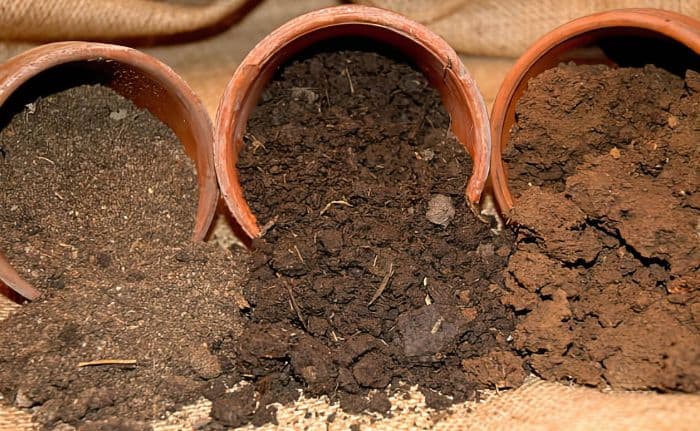
Understanding Different Types of Soil And Why It Matters
Not all soil is equal! Discover the different types of soil for gardening and learn how to test yours at home for a thriving garden.
You’ve decided to grow a garden. Wonderful!
Before you even pick out plants, here’s something that might surprise you: the real secret to a beautiful garden is the soil beneath your plants.
It’s all about the soil, especially the kind you have in your garden. It sounds boring, I know. But stick with me. Once you understand the six different types of soil, you’ll know what kinds of plants will do well in your garden.

In this post, we will take a closer look at soil, introduce the different types of soil, and show you how to test which type you have.
This post is part of my Gardening Basics series. Here you’ll find everything you need to understand to become a successful gardener.
Let’s Take A Closer Look At Soil
Most people don’t give soil much thought. It’s just dirt, right? Actually, not really.
Soil is actually a complex mix of different things. It contains mineral particles such as sand, silt, and clay, which give it texture.
Sand forms coarse grains, silt has medium grains, and clay is made of the finest particles.
Then there’s organic matter, decomposed plants and animals, that provides many nutrients.
But here’s what really blew my mind when I first learned it. Soil is actually teeming with life.
We’re talking microscopic organisms like bacteria and fungi, and larger creatures like earthworms and beetles, all working away beneath your feet.
A single teaspoon of healthy soil can contain thosands of living organisms. It’s basically a whole ecosystem down there.
Because soil ingredients vary from garden to garden, planting success depends on knowing which of the different types of soil you have.
Why Your Soil Type Matters
Soil nourishes, supports, and enables plants to thrive. Every plant has a preference for certain growing conditions.
Beth Chatto (1923-2018), an award-winning English gardener and writer, put it perfectly.
Chatto also came up with the phrase “the right plant, right place.” She encouraged gardeners to figure out what growing conditions they had in their garden and pick plants that prefer those conditions.
And it makes so much sense when you think about it. Let me give you a couple of examples.
Sandy soil drains quickly, so flowers that thrive in dry soil like lavender and rosemary love it.
Clay soil holds onto water, which makes it perfect for irises and ferns.
Once you know what you’re working with, you can stop fighting your garden and start working with it.
We’ve tried this in our garden. Our soil is heavy clay, and we’re slowly improving it by adding organic matter. Instead of fighting plants that don’t like heavy soil, we chose plants that love it, and they grow well with little effort.
The Six Different Types of Soil
In this post, we’ll look at six different types of soil:
We’ll also show you how to figure out what kind of soil you have here.
Sandy Soil
The Main Characteristics
- Sandy soil feels gritty between your fingers. It has large particles with many air spaces between them, which means it drains quickly and struggles to retain nutrients.
- Flowers that love sandy soil: Lavender, Yarrow, Cosmos, Poppy, Blanket Flower, Bearded Iris, and Penstemon.
- How to improve it: Add organic matter, such as compost. This helps the soil retain both water and nutrients.
Learn how to grow grass in sandy soil
Understanding Sandy Soil
Sandy soil has over 70% sand particles, which are large, gritty grains. It comes from weathered rocks and has very little clay or silt. This means it doesn’t hold together well, but it’s easy to work with.
A big challenge with sandy soil is that water drains too fast. While this stops waterlogging, it also means moisture and nutrients wash away before plants can use them.
There are some real advantages, though. Sandy soil warms up quickly in the sun, which is great news for plants that love warm conditions. Lavender, cacti, and succulents are perfectly at home in sandy soil because they are naturally adapted to dry, well-drained environments.
If you want to grow a wider range of flowers in sandy soil, compost is your best friend. Add it regularly, and over time, you will be amazed at the difference it makes.
Clay Soil
The Main Characteristics
- Clay soil has very fine particles, which make it heavy and sticky when wet. It holds water well and is rich in nutrients, but it drains poorly.
- Flowers that love clay soil: Asters, Daylilies, and Japanese Iris.
- Learn what types of grass grow well in clay soil.
- How to improve it: Mix in sand and organic matter, such as compost, to improve drainage and make it easier for roots to grow.
Understanding Clay Soil
If you’ve gardened in clay soil, you know it’s tough. When wet, it sticks to your boots, spade, and hands. When dry, it hardens like concrete. I’m not kidding—I’ve had my spade bounce off our dried clay soil. It’s that hard.
Clay soil is actually incredibly fertile. Clay particles measure less than 2 micrometers (very fine) and bind nutrients really effectively, making them readily available to your plants.
The other quirky thing about clay soil is the way it behaves with water. It swells when wet and shrinks when dry, sometimes dramatically.
The good news is that clay soil can be improved. Adding organic matter, such as compost, helps break it up, improves drainage, and makes it much easier for roots to push through. It’s a slow process, but it’s absolutely worth it. And in the meantime, do yourself a favour and choose plants that love clay.
Silty Soil
The Main Characteristics
- Silty soil feels smooth and almost floury between your fingers. It has medium-sized particles, sitting somewhere between sand and clay. It retains moisture well and is naturally fertile, but it can become compacted over time.
- Flowers that love silty soil: Roses, Peonies, Snowdrops, Daffodils, Hostas, Cranesbill, and Ferns.
- How to improve it: Add sand and compost to improve drainage and prevent compaction.
Understanding Silty Soil
If sandy soil is gritty, clay soil is sticky, and silty soil is smooth. When dry, it crumbles into fine powder. When wet, it feels slippery or greasy. It doesn’t hold its shape like clay, but won’t fall apart like sand either.
One thing to watch for is compaction. The fine particles can pack tightly over time, reducing drainage and making it tough for roots to grow. The good news? It’s easy to fix. Adding sand and compost regularly keeps the soil loose, drains well, and keeps plants happy.
Loamy Soil
The Main Characteristics
- Loamy soil is the gardener’s dream. It’s a balanced mix of sand, silt, and clay, giving it a crumbly texture that’s really nice to work with.
- Flowers that love loamy soil: Most garden flowers thrive in loamy soil, so any list would be endless.
- How to improve it: Loamy soil doesn’t need much. Just add organic matter regularly and test the soil now and then to check nutrients and pH (how acidic or alkaline the soil is).
Understanding Loamy Soil
If you could create the perfect garden soil, it would probably be loamy. It mixes the best parts of sand, silt, and clay into one well-balanced growing medium.
It drains well to avoid waterlogging, holds enough moisture to keep plants happy, is full of nutrients, and is easy to dig. What’s not to love?
Roots spread fast in loamy soil, so plants establish quickly and start absorbing nutrients right away. It’s the kind of soil that makes gardening easy, and if you have it, you’re lucky.
The key is to take care of it. Add compost or well-rotted manure regularly to maintain nutrient levels and healthy soil structure.
Peaty Soil
The Main Characteristics
- Peaty soil is dark and spongy, with a very high organic matter content. Organic matter means decomposed plant material, mainly from mosses. It retains moisture really well, but it tends to be acidic (pH below 7) and low in nutrients.
- Flowers that love peaty soil: Heather, Leopard Plant, some Iris varieties, Astilbe, Rhododendron, Azalea, and Marsh Marigold.
- How to improve it: Add horticultural grit and lime to reduce the acidity and balance the nutrients. Just be careful not to overdo it, though. A little goes a long way.
Understanding Peaty Soil
Peaty soil has an interesting story. It forms from decomposed organic material, mostly decaying sphagnum moss, that’s built up in wetland bogs over thousands of years. Yes, thousands. That dark, spongy stuff in your garden has quite a history.
The high organic content gives peaty soil its amazing ability to hold moisture. If your garden dries out fast, peaty soil can be a real help. It soaks up water like a sponge, and its soft texture lets roots breathe and spread easily.
The downside is that peaty soil is naturally acidic and low in nutrients, so many common flowers won’t do well. But here’s the good news: some beautiful plants love acidic soil. Rhododendrons, azaleas, and heather all thrive in peaty soil and can look stunning.
Chalky Soil
The Main Characteristics
- Chalky soil is light, stony, and naturally alkaline. It drains well but usually doesn’t have many nutrients.
- Flowers that love chalky soil: Aster, Astilbe, Calendula, Pinks (Dianthus), Delphinium, Echinacea, Hosta, Iris, and Lavatera.
- How to improve it: Enrich it regularly with organic matter (decomposed plant and animal material) and use fertilizers that are specifically formulated for alkaline soils (pH above 7).
Understanding Chalky Soil
Chalky soil is exactly what it sounds like. Light, stony, and rich in calcium carbonate, usually derived from chalk or limestone bedrock below. This makes it alkaline, with a pH of 7.1-8.0. avoiding waterlogging, but it means nutrients tend to wash away before your plants can get to them. So while it’s easy to work with, it’s not the most naturally fertile soil for gardening.
Another thing to know is that high alkalinity can lock up some nutrients, making them unavailable to plants even if they’re in the soil. That’s why picking the right plants is really important for chalky soil.
The good news is that there are some gorgeous flowers that genuinely love alkaline conditions. Delphiniums, echinacea, and clematis can all put on a wonderful display in chalky soil. And with regular additions of organic matter and the right fertilizer, you can gradually build up the fertility and grow an even wider range of flowers over time.
How To Figure Out Your Soil Type
The good news? You don’t need fancy tools to find which of the different types of soil you have. Here are some easy tests you can try in your garden.
The Squeeze and Release Test
Take a handful of damp soil and squeeze it in your hand. The different types of soil behave according to their properties. So, open your hand and see what happens.
- If it holds its shape but crumbles when you gently poke it, you have loamy soil.
- If it holds its shape and doesn’t budge when you poke it, you have clay soil.
- If it falls apart the moment you open your hand, you have sandy soil.
The Drainage Test
Dig a hole about a foot deep and fill it with water. Then watch what happens.
- If it drains away quickly, you have sandy soil.
- If it sits there for a long time, you have clay soil.
The Vinegar and Baking Soda Test
This test is a bit like a science experiment, and honestly, it’s pretty fun!
Put a small amount of soil into a container and add a splash of vinegar.
- If it bubbles or fizzes, your soil is alkaline. Hold it up to your ear and listen for a crackling sound to confirm.
If nothing happens, scoop some fresh soil into a second container, add water, and stir. Then add a pinch of baking soda.
- If it bubbles or fizzes this time, your soil is acidic. Again, listen for that crackling sound.
Soil Test Kits
If you want a more precise answer, an inexpensive soil testing kit is the way to go. It will give you an exact pH reading and take the guesswork out. Well worth having in your gardening toolkit.
The Glass Jar Test
This one takes a little patience, but it’s really satisfying to see the results.
Scoop some soil into a large glass jar, add water, and leave it to settle until the water near the top is mostly clear. Then take a look at the layers that have formed.
- The bottom layer will be the heaviest particles, consisting of sand and rocks.
- The next layer up will be silt.
- Above that will be the tiny clay particles.
- Any organic matter will either sit on top or float on the surface.
Using a ruler, measure the height of each layer and the combined height of all layers. Once you have those figures, you can calculate the percentage of each layer and use a soil texture triangle to identify your soil type.
Final Thoughts About The Different Types Of Soil
So there you have it, six different types of soil, each with its own quirks, challenges, and strengths. Knowing what kind of soil you have makes a big difference, not just in how hard you work, but in how well your flowers grow.
You don’t have to be an expert or use expensive tools. All you need is a bit of knowledge and a willingness to work with your soil, not against it.
Here’s the thing: every soil type, even tricky ones like clay and chalk, has plants that love it. Once you find those plants, gardening stops feeling like a struggle and becomes a joy.
So, get out there and start getting your hands dirty!