
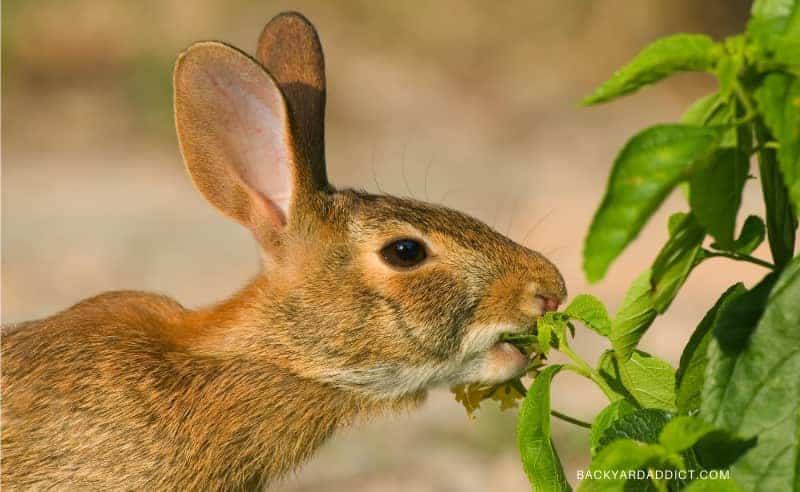
Do Rabbits Eat Tomatoes? How to Keep Them Out Of Your Garden?
Rabbits are a common garden pest and can cause quite a bit of damage to your garden plants. Do rabbits eat tomatoes? There seemed to be mixed opinions on this, but rabbits seem to enjoy the young seedlings and have been known to eat the fruit. If you want to protect your tomato plants, you need to take action right away. Read on to find the best ways to help keep rabbits away from your garden this year.
In a Hurry?
Do rabbits eat tomatoes? Yes, sometimes. Tomatoes are not a rabbit’s first choice of food, but they will eat them. Most of the damage is done to the fruit, but rabbits will also eat the leaves of young plants. The following methods will protect your tomato plants and garden from rabbits.
This posts contains affiliate links. This means we earn a commission from sales made via product links in this post. Read our full affiliate disclosure.
I always loved the Tale of Peter Rabbit when I was a child. Those rabbits were so cute! I cheered on the sneaky Peter Rabbit as he outsmarted poor Mr. McGregor and ate his vegetables.
Oh, how things have changed now that I am a gardener. All my sympathies are with the hapless Mr. McGregor! While I am not quite ready to make rabbit pie, I do not want those pests amongst my vegetables.
Are you tired of rabbits getting into your vegetables and flowers? Does the sight of freshly chewed plants in your carefully tended garden send shivers up your spine?
I know just how you feel. It is enough to make even the calmest person erupt in a spray of four-letter words. It is time to take back our gardens! With the correct knowledge and a little bit of effort, you can protect your plants from rabbit damage.
Do Rabbits Eat Tomatoes?
Tomato leaves are poisonous to rabbits, so they will instinctively avoid the leaves of mature plants. However, they will nibble on the leaves of young transplants. An expert from the University of Wisconsin maintains that tomatoes are one of the few crops immune to rabbit damage invasions. Other sites list tomatoes as a rabbit-resistant plant. So, there are some differences of opinion. I think gardeners are the best people to ask. In this discussion thread, gardeners describe the damage rabbits have inflicted on the tomato plants in their gardens. I tend to err on the side of caution when it comes to my garden. Tomatoes may not be the rabbit’s first choice, but it is wise to protect them just in case.
How to Spot Rabbit Damage
Rabbits can cause damage throughout the garden, munching a variety of plants and gnawing bark. It is easy to identify that rabbits are present because they are active during the day. You will probably see them. Other signs include
- Cleanly cut branches and stems.
- Stems and branches cut at a 45-degree angle
- Pea-sized droppings.
- Tracks in the soil.
Rabbits can only reach plants as high as they can stand, so any damage is limited to under three feet. Here is a picture that someone took of of rabbit damage to a giant Zinnia. Notice that the stem has been nipped off cleanly at a 45-degree angle.

The Internet Center for Wildlife Damage Management has lots of information (with photographs) to help you identify rabbit damage in your garden.
Do you see some damage that does not look like the description above? Perhaps you have deer munching on your garden produce. Check out our guide on keeping deer out of the garden and we can also show you how to keep racoons away from your home.
How to Keep Rabbits Out of Your Garden
You want to keep the rabbits away from your tomato plants and other vegetables. We got good news! You can control these pesky animals without killing them or calling pest control. We’ll feature three guaranteed methods.
Finding this post helpful? See all our wildlife and animal posts.
Excluding Rabbits
Build a Fence
A rabbit-proof fence is the most effective method of keeping rabbits out of your garden and away from your tomatoes.
A 1-inch mesh chicken wire (woven wire) fence will work well. It needs to be at least 2 feet tall. Be sure to bury the chicken wire several inches in the ground so the rabbits cannot burrow under it. Build it around the entire vegetable garden to solve your rabbit problem.
The initial installation may seem costly, but this long-lasting solution will provide relief from the aggravation of having to deal with rabbit damage for years to come!
Repelling Rabbits
Making your garden less attractive to rabbits
Rabbits prefer gardens that offer protection, so you can make your garden less attractive to rabbits by taking these protective elements away. Get rid of any tall, dense vegetation and cut down thick weedy areas. Remove rock or wood piles and any debris that offer protection. Your goal is to get rid of anything that can be used as cover or nesting sites. Control grasses and weeds along fence rows and seal off spaces beneath buildings and decks where they might build a nest.
You want to pay particular attention to anything that provides protective cover close to your vegetable garden. Rabbits will rarely cross a long stretch of open land, so place your vegetable garden out in the open if you can.
Rabbits instinctively look for protection from predators. If you can make your garden unsafe for rabbits, they will move to a more accommodating area.
Another tactic is to encourage natural predators like hawks and owls. Provide a nesting box for owls and perches throughout the garden. Install a large birdbath and turn off the garden lights at night.
Caution– Owls and hawks are wild animals that will prey upon small rodents like rabbits. However, they will also attack anything they think they can handle. There is a potential risk that smaller breeds of dogs and cats can become prey. Supervise your pets when they go out during the day and keep them indoors at night.
Commercial Repellent
Commercial repellants can be sprayed on and around plants. You should use them before there is damage and when you have just planted something new. Commercial repellants don’t always work and may only last for a short time.
There are two main types of commercial repellents that work to keep rabbits away.
- Taste-based repellents typically contain bittering agents, which make the plants unpalatable to animals. Apply them directly to the plant and reapply when it rains, after watering, or when the plant grows new leaves. Repellents are not suitable for food crops and should not be sprayed onto tomato plants. This is not the kind of salad dressing you want!
- Odor-based repellents work by creating an unpleasant smell for the animal. Sprayed them onto the ground around your garden.
Rabbits eventually build up a tolerance to repellents, making them less effective. It becomes expensive because they must be reapplied regularly. Commercial repellents work best when used in combination with other methods of preventing damage. They can be an extra layer of protection.
Do Ultra Sonic Devices Keep Rabbits Away?
In a nutshell, no ultrasonic devices do not keep rabbits away. Do not waste your money.
Ultrasonic devices emit a high-pitched sound that deters rabbits. In theory, the noise from the device causes a psychological reaction in rabbits, resulting in distress. They will flee from your garden. They are promoted as simple, chemical-free, and inexpensive. Unfortunately, I could not find any scientific evidence to support claims that they work.
This article reviewed the effectiveness of ultrasonic devices. According to researchers, rabbits in grass enclosures were only moderately affected by a sonic device. Even worse, the effect lasted for only 1 week.
I looked at a number of these devices on Amazon and read the reviews. Do not be fooled by the 4-star ratings. These devices seem to work for some animals and not others. Search for reviews that mention rabbits. Too many people reported they did not keep rabbits away. Therefore, I cannot recommend them.
Caution – These devices work by releasing high, ultrasonic sounds to keep pests away. We may not be able to hear them, but our pets can. These noises can cause distress to your pets. Give them a miss if your family owns any pets.
Can You Scare Rabbits Away?
Can you scare rabbits from your garden? I found only one scare tactic that works. Having a dog that spends time in your yard. Most dogs are natural hunters. They will joyfully give chase if they see a rabbit. Any rabbit will flee in terror if they see a dog coming their way. In addition, dogs mark the boundaries of their territory with urine. The rabbit will pick up this scent and steer clear.
There is a myriad of other suggestions for scaring rabbits. None of them work in the long term. These include shiny tape or party balloons, pinwheels, fake owls, and snakes. I even saw a suggestion that jars of water be placed in the garden. The idea is that rabbits are terrified of their reflections! Rabbits soon get used to these things and quickly learn to ignore them.
Trapping and Removing
Live trapping is the best way to remove individual animals causing damage. You can capture rabbits with a variety of live traps.
Check Regulations First
In many places, rabbits are considered game animals and can only be hunted during legal hunting seasons. In some areas, Property owners may trap rabbits outside of hunting season if they are causing damage to their property. Check with local and state regulations BEFORE trapping rabbits on your property. You don’t want to get into trouble.
You should also contact your local animal control department to ask about release protocols for rabbits. This process varies by state and locality, so it’s best to know the requirements beforehand.
Caution – Rabbits are wild animals. Any trapped animal is likely to be scared and will lash out with claws and teeth. They can also carry disease. Wear protective gloves and take precautions.
Make a plan to deal with captured rabbits
Once you’ve checked the regulations, you need to make a plan. What are you going to do with any rabbits you catch? When you have thought through the implications, you may decide to hire a professional pest control contractor who specializes in rabbits. To be honest, that is what I would do.
Box Traps
There are many kinds of traps. We would recommend the use of a humane trap such as a wooden box trap. They are not too hard to make. You can find free plans for building a wooden box trap here.
To catch a rabbit, you need to place the trap in an area where rabbits live, and you see signs of activity. Rabbits live in areas with tall grasses, bushes, briar patches, brush piles, and other places that provide protective cover.
Place rabbit traps in and along well-traveled rabbit pathways and trails. Set up a box trap by placing it on a flat and level surface. Put something heavy like a brick or weight over the top so that other animals cannot tip it over to get at the bait.
The best bait for a rabbit trap includes apples, carrots, lettuce, and corn. You need to check the traps at least once every day.
Dealing With a Trapped Rabbit
- Wear gloves to protect yourself from a potential rabbit bite and/or transferrable disease.
- If local laws permit, relocate the animal at least 5 miles away in an area that offers plenty of cover for protection.
- Handle the trap gently. Avoid sudden movements and noise. The trapped rabbit is already stressed and frightened.
- Do not leave a captured rabbit in the trap for any longer than necessary. You need to deal with these living creatures in a timely fashion.
- Keep children and pets away from traps.
Disinfect your cage with a bleach solution after letting go of the animal. It will stop the spread of disease. It will also remove your scent from the trap. This is important if you hope to trap more rabbits.
Conclusion
Let’s recap. No matter where you live, chances are you are going to see rabbits. Do rabbits eat tomatoes? Yes, sometimes. They are not a rabbit’s top choice, but they will eat them. If rabbits become a problem, you can take measures to manage them. Using a combination of prevention and control methods will reduce the damage and solve the issue. This post provides a variety of different techniques that will work. Whatever option suits you – we hope this blog post has helped give some insight into keeping those rabbits where they belong. Outside your garden! Now go out there and protect your vegetables. Trust me, you’ll be glad you did.