
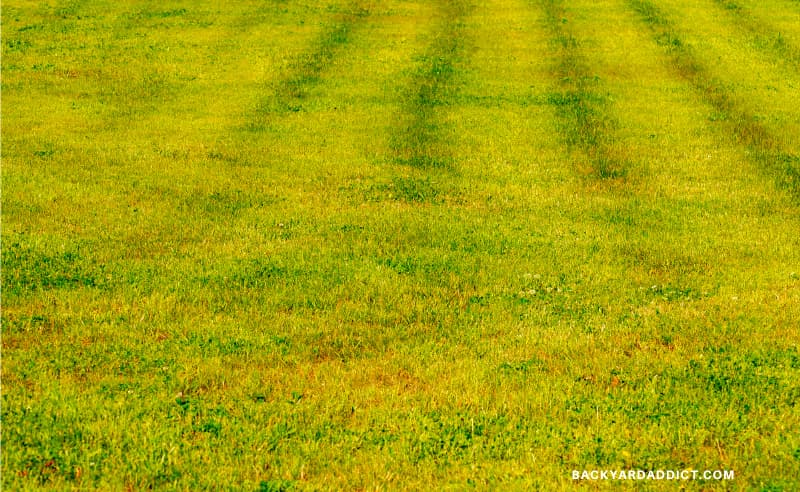
Grass Turning Yellow? Find Out Why And How To Fix It
You have planted a beautiful lawn, but now your green grass is changing color. Grass turning yellow can be caused by various problems, but don’t worry – it’s not usually the end of the world. Here are 6 reasons why your grass may be losing its color and how you can fix them.

Grass that’s turning yellow is a common problem for gardeners. But why is it happening, and how can you fix it? It’s important to know what is causing the color change before fixing the problem. This means having a good understanding of your lawn and its needs.
In this guide, we’ll help you diagnose your lawn problems by teaching you about 6 common issues that cause the grass to turn yellow. We’ll also show you how to treat these problems so that your grass stays green all season long!
What Causes Grass to Turn Yellow?
1. Too little or too much water
Your lawn needs the right amount of water to stay healthy. Grass can wilt and turn pale green or yellow if it’s not getting enough. The weather doesn’t always provide enough water, and you need to schedule regular watering or consider an irrigation system.
On the other hand, too much water can also be a problem. If the soil remains wet for too long, then grassroots can’t get enough oxygen and nutrients from the ground. Too much water can cause the grassroots to rot and die. This can cause the grass to turn yellow or even brown.
How much water does your lawn need? There isn’t a simple answer. Your lawn’s water requirements will vary depending on the type of grass, how much rainfall the area gets, and how hot it is. Still, a helpful guide is to aim for about 1-1.5 inches of water each week. New grass needs more because it hasn’t developed a sound root system yet.
Successful irrigation means keeping the grass healthy while not over-watering it or wasting resources. A rainfall gauge can help you better understand how much water your grass is getting naturally. You can then top up by watering.
If you want to go really high-tech, you can use a smart watering timer. Hook these devices up to your irrigation system, and they provide watering based on site conditions. They are really great if you plan to be away. This is the model we chose for our garden.
This post contains affiliate links. This means we earn a commission from sales made via product links in this post. Read our full affiliate disclosure.
[amalinkspro type=”showcase” asin=”B0758NR8DJ” apilink=”https://www.amazon.com/dp/B0758NR8DJ?tag=rediscofamili-20&linkCode=osi&th=1&psc=1″ new-window=”true” addtocart=”false” nofollow=”true” sc-id=”5″ img-sizes=”500:396″ imgs=”https://m.media-amazon.com/images/I/41Flmt5p2vL.SL500.jpg” link-imgs=”false” btn-color=”#ff9900″ btn-text=”Check on Amazon” alignment=”aligncenter” hide-prime=”0″ hide-image=”0″ hide-price=”1″ hide-button=”0″ width=”400″]Orbit 21004 B-hyve Smart Hose Faucet Timer with Wi-Fi Hub, Compatible with Alexa ,GRAY[/amalinkspro]
What time of day should I water?
Does it really matter what time of day you water your grass? The answer is yes. It can impact how quickly the grass blades dry after being watered. This will help reduce the risk of fungal diseases that grass gets when wet for too long. You can set it to water if you have a timer just before the sun comes up. This will ensure that the grass blades do not stay wet for long. Watering in the heat of the day will allow the grass canopy to dry quickly. Still, it may increase water costs due to evaporation loss.
2. Nutrient deficiency
Like all plants, grass needs certain nutrients to stay healthy. If your grass is turning yellow, it may mean that it’s not getting enough nutrients. The most common nutrient deficiencies are nitrogen and iron. Both are involved in the production of chlorophyll. This is the natural compound in green plants that gives them their color. It allows the plant to take the energy from the sun and turn it into sugar.
The main sign of iron deficiency is a gradual yellowing of the new and younger grass blades. While the main symptom of nitrogen deficiency is a yellowing of the older grass blades (source).
The fix sounds easy, apply the right quantities of missing nutrients, and your grass will slowly regain its green color. However, it is easy to over-fertilize if you are not careful. That is a lot harder to fix.
We highly recommend the use of a soil test. Test kits are readily available and come with full instructions. Many agricultural colleges offer free soil testing, and the results will come with recommendations. It is worth using Google, “Soil testing in (name of State). You could also check with gardeners in your area.
3. Over Fertilization
Too much fertilizer can cause yellowing as well. Over-fertilization occurs when the grass is given more nutrients than it needs for healthy development. This is often referred to as burning. The University of Minnesota explains.
- You get “burning” when the fertilizer is concentrated around the plant’s roots. The high concentrations of chemicals pull the water out of the plant.
- Burning often happens when a lawn is fertilized with fast-release fertilizers in hot weather. The grass is not watered sufficiently after application.
- Slow-release products are safer. If you add too much, they can burn the grass, but the slow release of nutrients means they are unlikely to build up in high concentrations.
- We recommend watering thoroughly after applying fertilizer unless the label tells you not to do that.
The best cure is prevention. Use a soil test kit and follow the directions for applying fertilizer. Is it possible to fix grass that has been burned? Yes, but it is not a fast fix.
Basically, you need to leach the fertilizer out of the soil with water. Apply an inch of water to the affected patches for seven days. Allow the lawn to out, rake up the dead grass, and remove about 2-3 inches of soil. Replace with good quality soil, tamp down, and reseed.
I turned to this book to get the information for the following two sections. It is a very comprehensive book and complete helpful information. Like many academic texts, it is horribly expensive. Amazon offers the option to rent it, but you could also bring it in through your local library or look for a second copy.
[amalinkspro type=”showcase” asin=”1119204631″ apilink=”https://www.amazon.com/dp/1119204631?tag=rediscofamili-20&linkCode=osi&th=1&psc=1″ new-window=”true” addtocart=”false” nofollow=”true” sc-id=”4″ img-sizes=”401:500″ imgs=”https://m.media-amazon.com/images/I/41cAQ1JgrQS._SL500_.jpg” link-imgs=”false” specs=”Expanded coverage on professional lawn care programs~~~Enhanced material on the most up-to-date thinking and practices in weed management~~~Brand-new chapters on the environmental, economic, and quality-of-life benefits of well-maintained turf, as well as the influence of light on turf health” btn-color=”#ff9900″ btn-text=”Check on Amazon” alignment=”aligncenter” hide-prime=”0″ hide-image=”0″ hide-price=”1″ hide-button=”0″ width=”750″]Fundamentals of Turfgrass Management[/amalinkspro]
4. Lawn Disease
Lawn diseases are usually caused by harmful fungi in the soil and grass thatch. The symptoms vary depending on the fungi. You might see circular spots, dead rings, or irregular patches growing on grass blades.
The first step is to find out what kind of disease you have. This document contains a comprehensive list of lawn diseases with descriptions and small pictures. Some diseases will turn the grass yellow. The most common of these are shown in the table below.
| Name | Occurs | Symptoms |
|---|---|---|
| Yellow patch | Early spring | Irregular circular patches with yellow or tan borders |
| Summer Patch | Hot, dry conditions in midsummer | Yellow patches 6-12 inches in diameter |
| Powdery mildew | On bluegrass lawns in shady areas | In dense shade, Powdery Mildew causes the affected areas of leaves to turn yellow. |
| Fusarium Patch | usually appears in early spring when snow begins to melt. Lasts as long as weather stays cool and wet. | Yellow patches that can range from several inches to one foot across. The patches eventually looked bleached. |
Once you have identified what lawn disease you are dealing with, look up the recommended treatment. You should find it easily on Google or your local agricultural extension service website. The usual course of treatment will often include the use of a fungicide. If you have a severe infection, you might want to contact a professional grass care services to help you.
How to Prevent Lawn disease
An ounce of grass disease prevention is worth a pound of cure. The best way to prevent lawn diseases are good grass management techniques, including
- Watering in the early morning: Fungal infections thrive in warm moist conditions. Water early to ensure the surface of the lawn is allowed to dry out between watering. Water
- Using a Sharp Mowing Blade: A sharp mowing blade will cut grass cleanly. A dull blade shreds the leaves, creating tiny wounds that make them more susceptible to infection by disease organisms.
- Mowing Frequently and Not Too Low: Cutting grass too low can stress the lawn and make it more susceptible to disease. Try not to cut more than one-third of the leaf blade at one time. Frequent mowing will help keep the grass cut without too much stress.
- Aerate the soil each year: the idea is to improve drainage, let water and nutrients soak into the ground. This encourages deeper roots and results in a healthier lawn able to resist disease.
- Remove thatch build-up: Grass thatch can lead to lawn disease problems. Thatch stops the grass from putting down healthy roots and leaves it vulnerable to disease. It can also provide an excellent environment for some fungi. Thatch needs to be removed each year in the spring.
- Use fertilizer carefully: Too much fertilizer, and you end up growing succulent leaves that are more susceptible to disease. At the same time, too little fertilizer creates a weak, unhealthy lawn.
5. Grubs and Insects
A yellowing lawn can also be caused by grass grubs and insects. Here are the most likely culprits
- Cinch bug: The first sign of a Cinch bug infestation is yellow spots on your grass. They cause damage by sucking the juices from the grass. You can check for them by pulling back the grass and checking for bright orange nymphs around the base of the plants.
- Greenbugs (aphids): these are usually found on northern lawns. They also cause damage by sucking the juice from the grass.
- Bermudagrass Scales are tiny insects that attack Bermuda Grass. They make a protective waxy shell at the base of the grass. They also feed on the sap and cause yellowing of the lawn.
- Groundbug Scales are similar insects but feed on centipedegrass as well as Bermuda. They can also attack Zoysia and St.Augustine grass.
- Two-lined spittlebugs feed on bermudagrass, centipedegrass, and zoysiagrass. As they feed, they inject toxins into the grass, turning it yellow and then various colors.
The University of Florida has a handy identification guide for many common lawn pests.
The first step towards dealing with lawn pests is identifying which one you are dealing with. Once you know that, it is much easier to find information on dealing with them.
There are several ways to treat pests, but pesticides are the most common. Always read the label carefully and follow the instructions. Be sure to wear protective clothing and gear when applying pesticides.
Severe infestation may need the help of a professional. They can deal with the pests and help you make sure they don’t come back!
Finding this post helpful? See all our lawn care articles.
6. Animal Urine
Do you have any animals visiting your yard? These would include pets or wild creatures visiting your yard. Another possible cause of a yellowing lawn is animal urine. All urine contains high levels of nitrogen, which will quickly turn the grass yellow.
You can quickly spot urine damage because it will show yellow spots that are often surrounded by greener grass. This is because a more concentrated center of the urine spot burns the grass and causes yellowing. The concentration is diluted towards the edges and acts as a fertilizer.
To prevent your lawn from being damaged by pet or animal urine, the first step is to keep the animals off your lawn. Dogs can be trained to use a specific spot in your yard, or you can create a dog run. Wild animals like deer are trickier. Your best bet is to keep them out of your yard.
- Keeping Deer Out of Your Backyard.
- How To Keep Rabbits Out of Your Yard.
- Preventing Racoons From Taking Over Your Yard
Treatment for urine spots is the same as that for fertilizer damage. LINK
How do I fix yellow grass?
Wondering how to stop your grass turning yellow and fix it? The answer is pretty simple. You need to find out what is causing it and address that issue. We have looked at the 6 leading causes above. This list summarizes our findings.
- Too much or too little water: Both can cause yellow grass. The fix? Adjust your watering schedule.
- Nutrient deficiency: A lack of iron and nitrogen both result in yellowing. Do a soil test and feed your grass as recommended.
- Overfertilization: Pulls the water out of grass and kills it. Irrigate the burnt area for 7 days. Remove dead grass and 2-3 inches of soil. Fill hollow with topsoil and reseed.
- Lawn Disease: Some fungal diseases can cause yellow patches. Identify the infection and treat it accordingly.
- Harmful Insect: Some insects (primarily those that feed on sap) will cause yellowing. Identify the infection and treat it accordingly.
- Animal Urine: Animal urine contains high levels of nitrogen that will burn the grass. Keep animals off your lawn and train dogs to urinate in a designated spot.
Can grass recover after turning yellow?
The good news is that most lawns will recover with good care. It is essential to find the cause of yellowing and address it correctly to get your lush green lawn back.
It depends on the cause of the yellowing and how badly the grass is damaged. Dead grass will not usually come back, and the lawn will need to be repaired. Grass blades that are yellowed due to nutrient deficiency or lawn disease can come back with the proper treatment.
Final Thoughts
If your grass is turning yellow, you don’t need to panic. There are several reasons why this might happen, and we have looked at the 6 in detail above. Once you know the cause, you can choose the right lawn care strategy to fix the problem. Sometimes it can be challenging to pinpoint the cause on your own, so you may have to consult professionals to get help. We hope that this article was helpful and that you will help your lawn recover quickly!
Footnotes and Sources
I work in an academic library, so I can access many scientific journals and books. When I write a post, I look at the scientific studies and books and use the information I discover. This post about grass turning yellow resulted from about about 5 hours of research. I looked at the following studies and book to see what turns grass yellow and how to deal it.
- Christians, N. E., Patton, A. J., & Law, Q. D. (2016). Fundamentals of turfgrass management. John Wiley & Sons.
- Larson, R. A., & Love, J. R. Minor Element Deficiency Symptoms in Turfgrass.
- “Fertilizing Lawns.” University of Minnesota Extension, https://extension.umn.edu/lawn-care/fertilizing-lawns. Accessed 18 Dec. 2021.
- Lamey, H. A., Ash, C. L. R., & Stienstra, W. C. (1988). Lawn diseases.