
Mold in Compost: Should You Worry? How to Handle It.
Composting is a great way to recycle and reuse natural materials we would otherwise throw away. But what about the mold in compost? Should you be worried? Mold can be an indicator of decomposition, but it needs to be treated carefully. Read this guide for more information about why there is mold in compost, what it does and how to deal with it safely.

Composting is a great way to turn your vegetable and fruit scraps into rich fertilizer for your garden. However, many people worry about the mold that forms on the compost because they think it might be dangerous.
Mold appears when organic matter breaks down and forms new life. It’s important to understand that mold in compost is not always bad news.
Read this guide for more information on mold and the role it plays in your compost bin. I’ll also talk about minimizing any risks associated with mold, so you know the best way to handle compost safely.
What is Mold?
Molds are members of the fungi family. They live off decaying organic matter. Molds can be found everywhere and play an important part in breaking down dead organic matter. They do this by secreting digestive enzymes into their environment and absorbing the nutrients that are released. Molds grow by sending out long string-like threads called hyphae. Molds thrive wherever there is moisture and a food source.
What Does Mold Look Like?
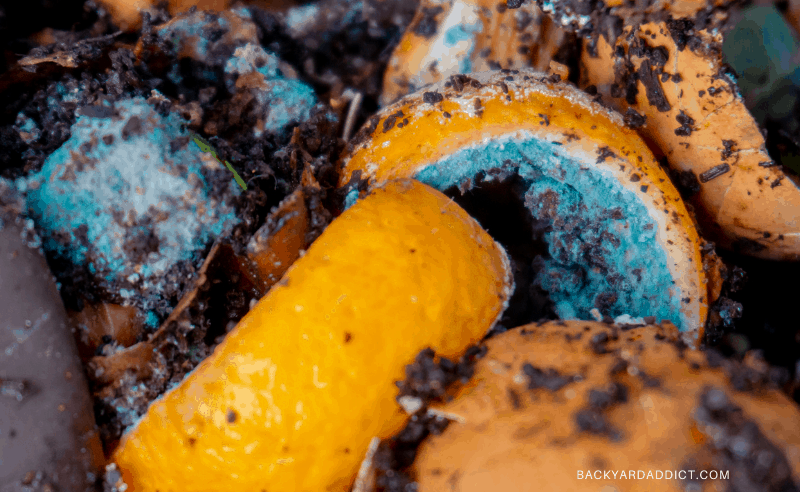
Mold starts out as small spots but expands quickly into larger irregularly shaped blotches. It may look fuzzy or powdery, or velvety. Some molds look slimy. They come in all kinds of colors from blue to white to black. If left long enough, the surfaces covered in mold will begin to rot.
Why Is There Mold In My Compost?
Your compost bin is the ideal environment for mold. It is full of dead organic matter and is usually moist and warm. Mold will thrive in such conditions, and gardeners do not need to be worried about their presence.
Is Mold Bad For Compost?
The mold in compost is usually a good sign. It means that the composting process has begun. Mold is often seen on dead matter like leaves, grass clippings, and fruit peels. Gardeners often wonder if mold is dangerous, but molds of this type are usually safe when treated with respect.
What Role Does The Mold in Compost Play?
In composting, microorganisms, such as bacteria and fungi to break down organic matter into rich soil that can be used directly in your garden. They play a vital role in composting because they break down garden waste and vegetable waste quickly and efficiently.
It would take years for organic matter to decompose without these microorganisms. Molds in compost bins speed the decomposition process significantly. They release digestive enzymes, which break down the tough, fibrous cells of plant materials. The mold’s presence indicates that decomposition is occurring as it should.
Can Mold in Compost be Harmful to Me?
In general, the mold in your compost pile probably isn’t going to harm you. However, you should be careful when handling moldy materials. The CDC says that breathing in mold spores can cause health problems for some people. This problem usually occurs when the mold is indoors. Still, you want to be mindful and take precautions when handling moldy compost.
The risk seems to occur when turning the compost. One study showed a significant release of spores when the compost was turned. However, this study was conducted at a large industrial composting site with mechanical agitators. This is very different from your small compost bin.
Another study of indoor composting bins found spores from molds didn’t travel beyond 0.5 m from the waste bin but were present around the composting bin. An outdoor compost will be safer as there is better airflow.
Cornell University suggests that children who have an allergic response to mold should not turn the compost. While adults can protect themselves by wearing a NIOSH-approved N-95 (or higher) mask.
The bottom line is this. The mold in your compost is unlikely to harm you. However, if you are concerned about safety, wear a mask when you are turning your pile. There are other precautions you can take to minimize the risk even further. We have detailed these below.
Effective Ways to Reduce Any Risk from Mold
Turning or handling the moldy compost only poses minimal risk for those who are sensitive to the spores. Still, it doesn’t hurt to err on the side of caution. Here are four simple ways to reduce the risk posed by mold in the compost bins:
1. Practice good hygiene
Practicing good hygiene after handling compost is a simple precaution we can all put into practice. Wearing gloves is recommended if you have cuts or abrasions. Wash your hands well when you are finished handling the compost and after removing the gloves.
2. Recognize potential symptoms of mold sensitivity
Symptoms of mold sensitivity include shortness of breath, wheezing, eye/nose/throat irritation, and headaches. If you notice that you have these symptoms every time you handle compost, chances are you are sensitive. You can verify this with an allergy test, but it makes sense to wear a mask or get someone else to do the turning.
3. Be mindful of the location of the compost bin
As a precaution, keep your compost bins well away from air intakes and downwind of your house. We have our bin at the bottom of the garden, and that seems to work for us. We use a compost bin in our kitchen, so we don’t have to trek to the bottom of the garden every time we peel a carrot!
4. Avoid turning compost on windy days
Compost needs to be turned regularly. However, try not to do this on a windy day as the wind will carry the spores. You can also spray the pile with water before turning. This will reduce the number of mold spores that are released into the air.
Can You Put Moldy Food In Compost?
You may be surprised to learn that most moldy vegetables, fruit, or bread can go straight into your backyard compost pile. As unhelpful as these molds might be if eaten, they are just what our composting bins love! Let’s not forget how well these organisms do their job when it comes time for some serious decomposition.
Please note that you should never put moldy animal products in your compost bin. These products will release a horrible smell as they decompose( like rotten eggs)and attract undesirable scavengers such as rats and houseflies. Rotting animal products are also breeding grounds for some pretty nasty bacteria. Feed your compost bin a vegan diet only! It will make you both happier.
Some gardeners express concern about composting moldy bread and fruit. The molds that grow on these things can contain naturally produced antibiotics. There is concern that this might impact the balance in your garden. However, the quantities produced in a backyard composter are small and are not likely to have a significant impact.
When To Worry About Mold in Compost
The only time to worry about your moldy compost is when it starts to smell really bad. A healthy compost will not give off unpleasant odors. If your pile smells like rotten eggs or ammonia, it is a sign that something is wrong. Neither problem is caused by molds.
A smell like rotten eggs means that you do not have enough oxygen to support the healthy bacteria. So, the bacteria that thrive in low oxygen conditions have taken over. These bacteria give off a gas that smells really bad. Unfortunately, the only way to deal with this is to turn your compost and even rebuild your compost pile. This video gives more details
If you are smelling ammonia, it means your compost pile has been fed too many green materials. When this happens, the compost pile can release nitrogen in the form of ammonia. It is easier to fix this problem. Add more layers of brown material like straw, dry leaves/grasses, newspaper, sawdust, or shredded cardboard.
Final Thoughts
Mold in your compost is a sign that your decomposition has begun, and this is a good thing. It is not uncommon to wonder if the mold in compost is dangerous. After all, mold inside our house or on our food is not a good sign. Still, mold in the compost is something to worry about. This kind of mold doesn’t pose any threat to you. Especially if you take some simple precautions as detailed above.
Thank you for reading! If you found this article helpful, please share it with fellow gardeners. Just click on the social media buttons at the top of this page. I would really appreciate it.