
20 Orange Perennials Flowers For Your Yard
There’s no denying that orange is an eye-catching color. So, if you’re looking to add a pop of color to your garden, consider using some orange perennials flowers. We’ll share 20 stunning orange flowers that will beautify your yard. We’ve sorted them by season to make planning easier. Also, don’t forget to check out our tips for using the color orange!

Orange Perennials Flowers That Bloom in Spring
Spring must be one of my favorite seasons. We experience long, brutal winters, so watching our garden come alive is a treat. And orange is the perfect color to add some excitement after all the drabness of winter. Here are a few orange perennials flowers that will brighten up your spring garden:
Orange Globe Globeflower (Trollius x cultorum)
- Height: 2-3 feet
- Spread: 18″
- Zone: 3-8
- Light needs: partial to full shade
- Type of soil: poorly drained
- Things of interest: Deer and rabbit resistant
Looking for something different in your garden this year? Check out the Orange Globe Globeflower! This unique plant will add a splash of color and interest to any garden or landscape.
Beautiful bowl-shaped orange flowers bloom on tall, erect stalks that rise above a clump of dark green toothed leaves. The long stalks make these flowers perfect for cutting and adding to bouquets.
The Globe Globeflower is also deer and rabbit resistant, so you can enjoy its beauty without worry. Give your garden the wow factor with the Orange Globe Globeflower!
Bearded Iris (Iris germanica)
- Height: 1-2 feet
- Spread: 1-2 feet
- Zone: 3-9
- Light needs: full sun
- Type of soil: well-drained
- Things of interest: Deer and drought resistant. Toxic to pets.
Looking for orange perennials flowers that will really make a statement? This Bearded Iris will do the trick!
The flower head has six creamy orange petals that look like silk. Three petals reach up, and three curve down (the falls). The beard is a mass of dark orange hair-like filaments at the base of the falls.
These gorgeous flowers bloom on tall stalks that rise above blue-green sword-like leaves, making them a genuinely eye-catching plant.
Tulip (Tulipa)
- Height: 9″ to 24″
- Spread: 5″
- Zone: 3 through 8
- Light needs: full sun
- Type of soil: well-draining, nutrient-rich
- Things of interest: Toxic to pets
Looking for a beautiful spring flower to add to your garden? Tulips are a perfect choice! This lovely bloom comes in various orange shades, including a tri-shade, and is a welcome sight at the start of the growing season.
Each stem features a single egg-shaped flower with two to six broad leaves. The leaves have a waxy coat that gives them a blue-green color, adding even more interest to this already beautiful plant.
Orange Snow Crocus (Crocus olivieri balansae)
- Height: 3-4″
- Spread: 3-4″
- Zone: 3 through 9
- Light needs: sun to partial shade
- Type of soil: well-draining, nutrient-rich
- Things of interest: Deer resistant
The snow crocus is a beautiful and delicate flower blooming in early spring. It is easy to identify by its striking orange-gold petals and ruby-black flame markings, somewhat reminiscent of the wings of a monarch butterfly.
The snow crocus is an essential flower for bees, as it provides food for them when few other flowers are available. These flowers grow amidst small grass-like leaves that appear variegated with lighter stripes down the middle. They are a true sign of hope that warmer days are on the way.
Oriental Poppy (Papaver orientale)
- Height: 1′ to 3′
- Spread: 1-2′
- Zone: 3 through 9
- Light needs: Full sun
- Type of soil: poor to average
- Things of interest: toxic to pets
Look at these beauties! They are one of the first perennials to send up shoots each year. Then come the blooms. These are one of the most dramatic flowers in our garden. Large, crinkled petals of vivid orange with deep purple centers. The petals can also be fringed or creased, and the stalks are hairy.
Our poppy thrives in dry, poor soil with minimal care, and the deer avoid it, so it is easy to care for. The plants form mounds of downy, deeply-lobed, and rich green leaves that make an attractive backdrop once the flowers fade. I highly recommend this plant.
Carnations (Dianthus caryophyllus)
- Height: 12″ to 18″
- Spread: similar
- Zone:7 through 10
- Light needs: partial to full sun
- Type of soil: slightly alkaline to neutral
- Things of interest: Deer and drought tolerant
Looking for some beautiful orange perennials flowers to add color to your garden? Carnations come in various colors, including orange, and the frilly-edged flowers can grow up to 2″ in diameter.
Each flower is attached to a strong, straight stem and appears to float about a low-growing mound of bluish-green leaves. These beautiful blooms can last up to two weeks when properly cared for, making them an excellent choice for cut flowers.
Carnations are easy to care for and make an excellent addition to any garden or outdoor space.
Coral Honeysuckle (Lonicera sempervirens)
- Height: 15′ to 25′
- Spread: 3′ to 6′
- Zone: 4 through 11
- Light needs: partial to full sun
- Type of soil: all soil types, including acidic and lime
- Things of interest: attracts hummingbirds
Looking for a beautiful vine to bring color to your garden? Coral Honeysuckle is a perfect choice! This vine features stunning orange to coral-colored flowers with bright yellow centers. The slender, deep-tubed flowers bloom on long vines that can reach up to 25 feet.
The lush leaves are a lovely shade of green, and the papery bark adds a touch of elegance. Coral Honeysuckle is a vigorous grower and is perfect for covering fences and trellises.
Finding this post helpful? Take a look at our other lists of flowers.
Orange Perennials Flowers To Enjoy During Summer
Ah, those summer days in the garden. The sun’s heat on your skin, the smell of freshly cut grass, and the sound of bees buzzing from flower to flower. And what could be more beautiful than a garden in full bloom? Why not add a splash of orange to the mix? Here are some orange perennials flowers that will bloom during the summer months.
Butterfly Weed (Asclepias tuberosa)
- Height: 1′ to 2′
- Spread: 18″ to 24″
- Zone: 3 through 9
- Light needs: full sun
- Type of soil: well-draining, dry
- Things of interest: Attract butterflies, moths, and bees. Resistant to deer and rabbits.
The butterfly weed is a clump-forming perennial that is easy to care for, making it the perfect choice for any gardener. This beautiful plant forms clusters of tiny star-shaped flowers with colorful foliage, adding a touch of whimsy to any garden. The glossy green leaves are lance-shaped and add a touch of elegance to the plant. They can become invasive, so keep them in check.
California Poppy (Eschscholzia californica)
- Height: 12″ to 18″
- Spread: 8″ to 10″
- Zone: 6 through 10
- Light needs: full sun
- Type of soil: well-draining, poor soil
- Things of interest: Attracts bees and resists droughts, rabbits, and deer.
Looking for a show-stopping flower to add to your garden? Then you need a California Poppy! These beautiful flowers have silky petals in bright orange. They’re sure to add a pop of color to any garden.
These flowers are easy to care for and make a great addition to any garden. With their silky petals and pretty blue-green foliage, they’re sure to make you smile. The Petals are quick to shed, making these flowers better for gardens than cut flowers.
Hummingbird Hyssop (Agastache ‘Wildfire’)
- Height: 2′ to 4′
- Spread: 12″
- Zone: 5 through 10
- Light needs: full sun
- Type of soil: well-draining
- Things of interest: Rabbit and deer resistant.
The Hummingbird Hyssop is a stunning addition to any garden! These beautiful plants boast two-lipped, tubular flowers that are hummingbird magnets. But wait! There’s more! Crushing the leaves releases the plant’s natural fragrance, a delightful mix of mint and licorice.
The thick, upright stalks are topped with tiny arrays of two-lipped, tubular flowers, and the greenish-gray to green leaves are formed in clumps. This hardy plant is easy to care for and maintenance-free, making it the perfect choice for busy gardeners.
Daylily (Hemerocallis fulva)
- Height: 8″ to 5′
- Spread: 1″ to 3″
- Zone: 3 through 10
- Light needs: full sun to partial shade
- Type of soil: loamy, fertile, moist acidic, or alkaline (6 to 8)
- Things of interest: Toxic to cats
Looking for a sunny addition to your garden? Meet the orange Daylily! This cheerful plant sports vibrant orange blooms with yellow streaks, set against rich green strap-like leaves. Hardy and easy to grow, orange Daylilies make a bold statement in any garden bed or border.
Each flower only lasts one day, but there are multiple flowers per stalk, so you’ll enjoy these blooms for a while. Best of all, these plants require very little care. You can just sit back and enjoy the show! So bring some color to your garden with orange Daylilies today.
Orange Yarrow (Achillea milleolium )
- Height: 2-3 feet
- Spread 1-2 fet
- Zone: 2-10
- Light needs: full sun
- Type of soil: moist and well-drained
- Things of interest: Drought tolerant. Deer and rabbit resistant.
Looking for something a little different in your garden? Check out, Orange Yarrow! This unique flower features tiny clusters of flat, umbrella-shaped blooms on slender stems. The Aromatic gray-green foliage grows in large clumps, adding texture and interest to your garden.
Yarrow is easy to grow and perfect for beginners. It’s tolerant of many conditions, so you can plant it and forget it. Yarrow thrives in our sunbaked clay soil, so it grows anywhere. This plant is a bit of a thug and will quickly take over a flower bed if you let it. New seedlings will pop up by the hundreds. Weed them out ruthlessly.
Coreopsis (Coreopsis verticillata )
- Height: 15-18″
- Spread 20-26
- Zone: 5-9
- Light needs: full sun
- Type of soil: sandy and well-drained
- Things of interest: Drought tolerant. Deer and rabbit resistant.
Looking for a splash of color in your garden? Coreopsis is the perfect plant for you! The orange flowers rise above rounded mounds of gray-green, thread-leaf foliage. Coreopsis is sure to brighten up any space.
These happy little plants boast orange daisy-like flowers with red-orange centers. The undersides of the petals are golden yellow, adding even more interest and visual appeal. Each petal is pleated from the pointed tip to the center for a pretty, textured look.
Trumpet Vine (Campsis radicans)
- Height: 25′ to 40′ in length
- Spread: 30 feet
- Zone: 4 through 9
- Light needs: partial to full sun
- Type of soil: 1 to 7.3 pH (slightly acidic to neutral)
- Things of interest: Drought resistant
Looking for a plant that will add some serious pizzazz to your garden? Then look no further than the Trumpet Vine! This fast-growing deciduous vine is covered in beautiful trumpet-shaped flowers with deep orange throats. And each stem can produce four to 12 of these stunning blooms!
In addition, the Trumpet Vine also has attractive elliptical leaves that are divided into smaller, dark green leaflets. It is an ideal plant for covering fences, walls, and trellises. Trumpet vines are also excellent plants for attracting birds and butterflies to your garden.
This plant requires regular pruning to ensure the plant grows in the right direction and doesn’t become invasive.
Orange Perennials Flowers To Brighten Up Fall
Orange is one of the colors associated with fall, so it is the perfect time to add some orange perennials flowers to your garden. Here are some fabulous orange flowers that will keep your garden looking beautiful throughout the season. There are plenty to choose from.
Blanket Flower (Gaillardia)
- Height: 12″ to 24″
- Spread: 12″ to 15″
- Zone: 3 through 10
- Light needs: full sun
- Type of soil: well-draining, non-pH specific
- Things of interest: Drought, deer, and rabbit resistant
Looking for a little something to add some visual interest to your garden? Say hello to the blanket flower! The blanket flower gets its name from its resemblance to traditional Native American woven blankets. This cheerful plant will bring a burst of color to any space with its pretty blooms in shades of yellow, orange, and pink.
This plant forms a slowly spreading mound of bright green foliage, so it’s perfect for filling in any gaps in your planting beds. Best of all, the blanket flower is super easy to care for. Just give it some sun and well-drained soil, and it will thrive.
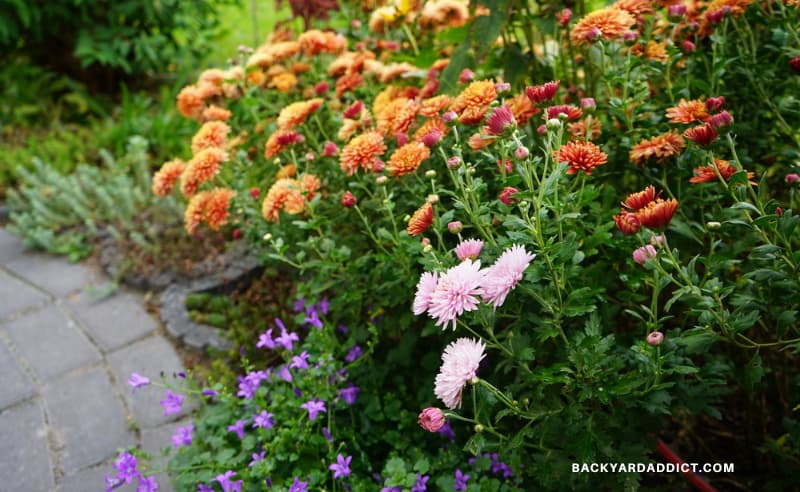
Chrysanthemums (Chrysanthemum rubellum)
- Height: 2-3 feet
- Spread: 2-3 feet
- Zone: 5 through 9
- Light needs: full sun
- Type of soil: nutrient-rich, loamy, well-draining
- Things of interest: toxic to most pets
Looking for something special to add to your garden this year? Why not try hardy chrysanthemums?! They come in a wide range of colors, including orange. These beautiful flowers are easy to care for and brighten the fall.
Clusters of double flowers are formed by layers of paper-thin petals, giving them a delicate yet lush look. The plants are compact and bushy, with multi-branched stems of soft green foliage.
Sneezeweed (Helenium autumnale)
- Height: 2′ to 5′
- Spread: 30″
- Zone: 3 through 8
- Light needs: full sun or partial shade
- Type of soil: moist, mulched soil
- Things of interest: Deer resistant
Beautiful and unique, sneezeweed is an excellent addition to any garden. The orange petals and brown cones are eye-catching and attract bees, butterflies, and other pollinators.
Sneezeweed grows distinct daisy-like flowers with broad spoon-shaped orange petals around a spherical brown cone. The plants have long lance-like leaves and erect upright stems. They are easy to grow and make a great addition to any garden.
Chinese Lantern (Alkekengi officinarum)
- Height: 1′ to 2′
- Spread: 1′ to 2′
- Zone: 3 through 9
- Light needs: partial shade to full sun
- Type of soil: average, well-draining, moist, 6.6 to 7.3 pH
- Things of interest: Attracts bees. Roots, fruit, seed pods, and leaves are poisonous.
Chinese Lanterns are perfect for adding a splash of color to your fall garden. This unique plant produces lovely pumpkin-orange seed pods that are simply stunning against the backdrop of medium green leaves.
We are cheating a bit with the plant. This plant blooms in the summer. However, the small white flowers are pretty insignificant. This plant comes into its own in the fall when the vibrant orange seed pods start forming. Chinese lanterns are easy to grow and will brighten up any garden.
Chinese Lantern plants tend to have an aggressive spreading growth pattern, so keep them contained. If you are looking for a plant that is both beautiful and easy to care for, the Chinese Lantern is a perfect choice.
Orange Coneflower (Echinacea)
- Height: 18-20″
- Spread: 18-20″
- Zone: 4 through 9
- Light needs: full to partial sun
- Type of soil: poor to average soil
- Things of interest: Drought and salt tolerant.
The Orange Coneflower is a beautiful plant that is perfect for adding a splash of color to any garden. The flowers are a deep orange with broad overlapping petals. The center cone is also orange.
The dark green foliage provides a lovely backdrop for the flowers, and the plant has an upright habit with numerous stems. This makes it ideal for filling gaps in borders.
Orange Coneflowers are easy to care for and thrive in most soil types. They are also drought-tolerant and will continue to bloom even in hot weather. If you are looking for a plant that will add some vibrant fall color to your garden, the Orange Coneflower is a perfect choice.
Echibeckia (Summerina Orange)
- Height: 1-2′
- Spread: 1-2′
- Zone: 5-9
- Light needs: full to partial sun
- Type of soil: moist well-drained
- Things of interest: attracts birds and butterflies
Echibeckia is a stunning perennial that will add interest and impact to your garden. These plants grow in upright clumps and have lance-shaped, toothed leaves that are dark green and hairy. In summer, they produce numerous large flowers with orange petals that become darker rusty orange towards the base.
Echibeckia is a cross between Rudbeckia and Echinacea. They enjoy the fast growth rate of Rudbeckia and the disease resistance of Echinacea. This makes them an excellent choice for gardeners who want low-maintenance plants that will still provide a splash of color.
Tips For Using Orange in the Garden?
All The Shades of Orange
What did you think of when you heard the word orange? Does your mind go immediately to very bright colors? In the garden, the color orange encompasses many tones and shades of orange. These include colors such as apricot, persimmon, peach, tangerine, burnt orange, salmon, pumpkin, and coral.
You can find orange flowers in all shades, so you’re sure to find the perfect one for your garden.
What Does The Color Orange Symbolize?
Orange symbolizes excitement and energy. It is fun, playful, enthusiastic, and associated with warmth and energy. If you wanted to describe the color, you might choose words like cheerful, lively, exciting, vibrant, and happy.
The Challenges With Orange Flowers
Orange is a secondary color, which means it’s made by combining two primary colors: yellow and red. A lot of orange can be a little intense because it’s such a strong color. Some might even call it garish.
How to Use Orange in the Garden
If you want to make a bold statement in your garden, orange-flowered perennials are your friend. Their vibrancy will add life to any garden and, when used correctly, can be stunning. Here are some tips on how to use orange.
Orange is a color that gets your attention. So, it is a good color for drawing attention to garden features. Do you have a garden feature that fades into the background? Orange can help draw attention to it. Think of orange flowers as a living highlighter!
One little-known fact is that orange flowers trick the eye. They appear to be closer than they actually are. So, orange combined with red and yellow can make larger spaces seem more intimate. For example, if you have a large garden, adding some orange flowers can make it feel cozier.
Another thing to remember is that orange is a great way to attract pollinators to your garden. So if you’re looking to attract bees, butterflies, and hummingbirds, consider using some orange-flowered perennials.
Using orange in the garden can help you create an eye-catching landscape that is full of interest.
What To Pair With Orange Perennials Flowers?
If you want a pop of color and energy, pair orange with complementary colors such as blue or purple. These colors are opposite in the color wheel and create a fabulous contrast.
For a more subtle approach, try pairing orange with the adjacent colors of yellow and red. These two colors will create an excellent sense of harmony.
When planning your orange garden, think about what feeling you want to create. If you want a lively and energetic garden, go for brighter shades of orange. But if you’re looking for something more subdued and calming, consider using apricot or peach tones.
Orange is a color with a lot of personality. It can be loud and attention-grabbing, or it can be soft and sophisticated. It’s a great color to use if you want to wake up a sleepy garden or to harmonize with just about any other color. Using orange judiciously can really make a difference in your garden.
Don’t be afraid to experiment with this vibrant hue. With some practice, you’ll quickly become an expert at using orange flowers in the garden!
Well, that’s it for this post. We hope you enjoyed learning about orange perennials flowers. I don’t know about you, but I am ready to add some more orange perennials to my garden? I’ve already placed an order for Snow crocus and am looking seriously at the blanket flowers for next year. I’m sure the bees and hummingbirds will thank me. How about you? If you enjoyed this post, please share it with your gardening friends! Thanks for reading!