
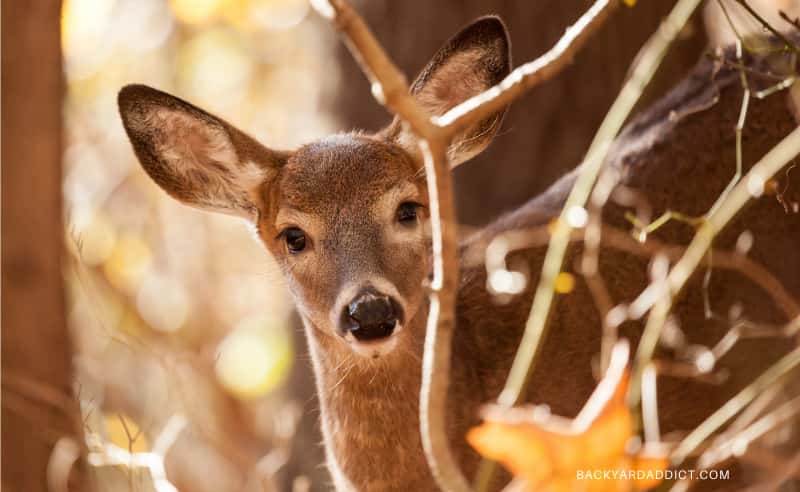
What to Feed Deer in Your Backyard: What You Need to Know!
Looking to discover what to feed deer in backyard? Feeding deer is a great way to bring the beauty of nature right to your back doorstep. Here is everything you need to know about feeding these beautiful animals, including the best options for food and what you should avoid. We delve into the arguments for and against feeding and provide helpful tips to make it work!
You might want to encourage deer to come into your backyard, but you are not sure what food to feed them. There are many different opinions on what a deer should eat, and you do not want to end up causing these beautiful creatures more harm than good.
Wading through all the conflicting information can be an overwhelming task. There is a right way and a wrong way of feeding deer in your backyard. Feeding deer the wrong food can make them sick. Sometimes it can even be fatal.
To help navigate the choices, we have created an easy guide that lists the best foods and those that should be avoided at all costs! We will provide you with tips and tricks for feeding that keeps everyone safe. From the right food choices to managing expectations, we will help you learn what you need to know about caring for a deer in your backyard.
In a Hurry?
What to Feed Deer in Your Backyard
You can feed deer foods such as trimmings from trees, oats, ready-made deer food, acorns, and vegetables. These food sources are safe for deer to consume and enjoy. You should NOT feed deer corn and hay in the winter, human food, or meat products since their digestive systems cannot digest the food. Some of these products can even be fatal to deer.

The best place to start when thinking about what to feed deer in your backyard is to look at what they eat in the wild.
What Do Deer Eat In The Wild?
Deer spend most of their days hunting for various types of plants for their herbivore diet. Their feeding habits change depending on the season, and on what they can find.
These dietary sources include the leaves and twigs of woody plants, weeds, new grass, nuts, and mushrooms.
Browse
Browse is the staple diet of deer. These browse plants are any shrubs or young trees that can be reached by the deer. Browse plants may be found year-round, regardless of the season. In the spring and summer, this will include leaves and twigs. In the winter, deer will eat the twigs, stems, and even bark of the plants.
Forbs
Forbs are broad-leafed plants or weeds. They can be abundant in fields, along roadsides, or near the woods. They are a good source of food for deer in the spring and summer.
Deer will eat some grass, but only when it is young, green, and succulent. They will graze on grass-like plants such as clovers and alfalfa, provided they do not get too woody.
Mast
Mast is an umbrella term that refers to acorns, nuts, and fruits. During periods of drought or rapid growth, they provide high-energy sources of food. This includes fruits such as plums, blackberries, and grapes. Some fruits such as apples and pears provide energy when the deer start storing fat for the colder months.
Mushrooms
Perhaps the most surprising thing deer eat is mushrooms. Who would have thought? It seems as if mushrooms supply nutrients that are often missing in the everyday food deer eat. Mushrooms are a good source of phosphorus, as well as protein.
In the spring and summer, deer graze mainly on forbs, such as new grass, forbs, leaves, and flowers. This is their main food supply during the growing season. It makes sense as this is what is growing in abundance.
The deer’s food gradually changes to browse as winter approaches (stems, bark, and twigs). Again it makes sense, since that is all that is available in the wild for them to eat.
This posts contains affiliate links. This means we earn a commission from sales made via product links in this post. Read our full affiliate disclosure.
What Is the Best Thing to Feed Deer?
We’ve compiled a list of what deer like to eat when they’re out in the wild. But what can we offer when they come looking in our backyard? Deer are always on the lookout for some tasty treats to munch. So, if you want to know what to feed deer in your backyard, use any of the following
- Tree Trimmings: Do you live on an acreage and practice thinning and pruning of the trees? Those trimmings are the perfect food and can be left for the deer. They particularly love the twiggy branches.
- Oats – Oats are a great way to get deer interested in your feeder! They’re inexpensive, nutritious, and the deer will love them.
- Ready-made food mixes for deer – there are plenty of formulated deer food mixes to make things easier.
- Deer feeders are a great way to provide your deer with nutritious food. The best food to put in them is deer pellets. These are formulated to meet the deer’s specific nutritional needs. Using them will give you peace of mind. You will not have to be concerned about inadvertently feeding deer something that would make them sick or lead to malnutrition.
- If deer pellets are not available, offer goat, or rabbit food to the deer instead. Look for those that include alfalfa hay, soybean meal, distillers dried grains, and rice bran (less than 25 %). Avoid any with high percentages of corn as this can cause harm to deer. The feed must have at least 12% protein, though. So read the labels carefully! Avoid horse feed as the deer cannot digest the high grain content.
Finding this post helpful? See all our wildlife and animal posts.
What Not to Feed Deer
- High Carb Grains: Deer should not be given wheat, barley, or corn. The rich starch content in these meals might be fatal to deer since their stomach cannot digest and break down the starches. I know that there will be readers who question this. They see deer feeding on the corn and grain growing in their region, so it stands to reason they can handle it. The deer in these regions have adapted to this food. Their digestive system has the microbes needed to digest carbohydrates. If you are sure that the deer coming into your yard are used to eating these grains, it is probably safe. However, acidosis is a painful way for deer to die. I do not think it is worth the risk of harming the deer.
- Hay: Hay is best avoided unless the deer are used to eating it. We have dealt with this in detail in the FAQ below. If deer have not built up the microbes needed to digest hay, they will be unable to deal with it. There have been instances in which deer have died of starvation with stomachs full of hay because they could not digest and pass it.
- Human Food: Our food requirements are very different from those of deer. We could not survive on their diet of browse and mast because we have not got the digestive system to deal with it. It is the same for the deer. They cannot digest most of the food we eat, and it could actually kill them.
- No Animal Protein: Feed for deer should not include animal protein from animals in the pellets. Deer are herbivores and do not eat meat.
What is Acidosis in Deer?
Deer are ruminants. They have a very specialized digestive tract which allows them to process the woody material they eat.
Food initially enters the rumen, which is home to the microbial population of bacteria, protozoa, and fungus. These are exclusively responsible for breaking down the enormous amounts of ingested fibrous plant material.
When a ruminant eats corn or other high-carbohydrate foods, the stomach equilibrium is disturbed. The delicate balance of bacteria in the rumen needed for digestion is destroyed. Carbohydrate-digesting bacteria multiply fast. They quickly outnumber the other flora and take over. These bacteria start to generate an excessive amount of lactic acid.
Lactic acid is absorbed by the body and disrupts normal body functions. The deer’s muscles stop working, and they cannot walk. They become severely dehydrated, and the excess acid burns the lining of their digestive tract. Once this happens, death follows quickly.
Having said this, if deer are used to eating corn, they have the microbes necessary to digest it. High starch grains are most harmful when introduced suddenly in the middle of winter.
Should I feed the deer in my backyard?
Given that deer are, first and foremost, wild creatures, there will always be advantages and disadvantages to feeding them.
The ethical issue of feeding deer centers around the idea that nature supplies what is required to support a healthy deer population, and we should not interfere with that.
Before we get into the pros and cons, please check your state and local bylaws. You need to ensure that there are no regulations that prohibit the feeding of deer. You do not want to get into legal trouble!
To feed or not to feed is a highly personal decision. So, let us delve a bit further into both sides of the debate so you can make an informed choice.
The arguments for feeding deer
- The primary benefit of feeding deer is that it brings you closer to nature. This has a slew of advantages, including enhanced mental resilience and a sense of well-being. It is the perfect antidote to modern living.
- Deer are also beautiful creatures. Watching them play in your backyard can be heartwarming, to say the least!
- Feeding provides an excellent learning opportunity for you and your children. In a world full of technology, more and more children are disconnected from the natural environment. Developing an appreciation for wildlife in this way helps. In addition, your kids will have the chance to learn about things like the feeding habits of deer, winter survival, doe/fawn relationships.
- You may add a little extra food to the deer’s diet during the winter when it becomes difficult for the animals to obtain their own nourishment. The food you provide can be enough to keep them alive until the spring green-up.
- There is a great deal of satisfaction that comes with helping out wildlife in need. Mother earth gives us so many amazing gifts, so it makes sense to repay her by helping out where we can.
The arguments against feeding deer
- You have no control over what the deer visiting your yard will eat. They do not see any differences between your prize roses and the food you provide for them. They will eat shrubs, small fruit trees, hostas, and tulips.
- This also means that the deer you feed may become a nuisance to your neighbors and damage their garden.
- Feeding deer interferes in the natural selection process. This can result in a deer overpopulation that may spiral out of control. Natural predators such as coyotes may be drawn to the region to prey on the deer.
- You cannot halt the feeding process once it begins because the deer are dependent on you as a food source. As a result, you must ensure that you have the budget to keep providing the feed until spring green-up.
- You can be susceptible to diseases and ticks if you come in close contact with the animals. Deer host the ticks that carry Lyme disease, so that is a big concern. However, deer can potentially transmit many diseases that pose a risk to both humans and pets.
- Deer that are fed may lose some of their natural wariness of people and other human things. This is not a good idea as they might become aggressive. This also increases the chance of you or your children being injured by deer. Those hooves are very sharp and can cause a great deal of damage.
Tips For Feeding Deer in Your Backyard
- To reduce deer/car collisions, place deer feeding sites at least a half-mile from plowed roads.
- To minimize rivalry among deer, place any food in several different locations each day. Keep in mind that bringing a lot of deer to one feeding place will tend to attract predators.
- Once you have started feeding deer in the fall, it is important not to stop until spring greenery emerges. The deer will become dependent on the food you provide. If you stop, they will experience a great deal of stress!
- Just because deer will eat something you leave for them does not mean it is good for them. Make sure you know what food deer can eat and what will cause harm.
What Is An Inexpensive Way To Feed Deer?
Here’s the thing, deer are voracious feeders. They need to eat a lot to survive, particularly in the winter. The average deer needs approximately 6-8% of their body weight in green foliage and browse daily to thrive. For a 150-lb. deer, that is 9 -12 pounds. That is a lot of food!
This video will help you visualize how much food deer might eat in a day.
Obviously, you do not have to provide all of that food. Still, if you want to attract deer regularly without going broke, you need to plan carefully. It all boils down to this, the only way to feed deer inexpensively is to create a yard that will provide food naturally.
Let me explain. Buying enough supplemental food to feed the deer will be expensive. However, those deer will come if you create a yard that provides what they need. That is assuming that you have deer living in your area.
We live in a small hamlet with plenty of deer around. We do not feed them but have no trouble attracting them to our yard. They are opportunistic feeders, and it does not take much to encourage them in.
How to Attract Deer to Your Backyard
You do not need acres of land or expensive equipment to start attracting deer into your yard. All you really need is some understanding of what deer require. Once these needs are met, all sorts of animals will begin coming around on their own accord looking for food – including deer!
What to Plant to Attract Deer
Here is an extensive list of native deer food by geographic area. It includes everything from brambles to sumac. Look at the list and ensure that you encourage the growth of these plants. In Canada the list includes asters, brambles, chokecherry, fireweed, pondweed, snowberry, sow thistle, trillium. Some of the plants on the list may be weeds. Consider cultivating a natural area in your yard and letting these plants grow wild.
In addition, you can plant fruit and nut-bearing trees and leave the fruit for the deer. These would include things like
- Crab apple
- Oaks
- Beech
- Blackberries
If you have an acreage, here are some practices to help attract the deer.
- If you have trees in your lot, it is good to keep them pruned and thinned out. It encourages growth and reduces the fire risk. Do not burn the twiggy branches. Leave them out for the deer to enjoy.
- Forage planting is a great way to provide food for deer. Plant small plots of land with clover or alfalfa. The deer will find them quickly.
- Hardwood trees such as oak and beech trees will eventually produce acorns and beech nuts that deer enjoy. Take care when you are choosing a location for your trees. The University of Idaho has a helpful handout packed full of advice. You will need to protect the trees when they are young as the deer will destroy them.
Although deer will be attracted to food, there are other things you can do to encourage them to visit your yard. The goal is to make your garden an inviting place rather than a hazardous one. Here are some simple tips.
Create a water source for them
This is the most effective method to entice deer as they need a plentiful supply of clean water. It does not have to be fancy. A shallow dish works just fine. This video shows how to make a cheap watering hole for about $15. Remember to place it far away from your house, as deer are more likely to visit it.
Set up some mineral blocks in your backyard
Mineral blocks formulated for deer will supplement important minerals and vitamins not supplied by their food. When bucks develop antlers, they require vitamins, calcium, and phosphorus. Pregnant or nursing does also require extra nutrition. They will be attracted instinctively to the mineral blocks. In addition, minerals are needed for the health and well-being of all animals, including deer. They aid in the digestion of food, improve eating, faster growth, better antler growth, and increase reproductive success.
Provide cover
Deers are instinctively timid and easily startled. Make sure you provide some sort of cover in your yard. Deer look for areas that give good protection from predators. The most effective approach to accomplish this is to allow existing bushes, lawns, and undergrowth to grow in a specific region of your yard. Deer will linger in a secure shrubby area that provides both cover and food.
Provide easy access
This might sound obvious, but a fenced-in yard will be less attractive to deer. Make sure there are places within your yard where deer can enter and exit without much resistance.
Do not install bright lights
Bright lights or loud sounds will startle deer and make them wary of visiting your yard. Get rid of them if you can, or keep these to a minimum.
Keep your distance
Maintain enough distance from deer to protect yourself from injury and avoid startling them. The same thing applies to your dogs. Deer will view your dog as a predator and will flee or defend themselves if they feel threatened. Dogs are actually the best way to keep deer out of your yard. If you have a furry friend, you may have to be content with seeing the deer in the wild.
What To Feed Deer In Your Backyard FAQ
Can You Feed Deer Carrots?
It is not unhealthy or dangerous to offer deer carrots, but they should not be the only thing you offer.
Carrots are a delicious treat that many deer species enjoy. They do not offer much nutritional value, however. They are no substitute for the natural browse that should make up most of a deer’s diet.
Don’t get me wrong, deer will enjoy carrots. There is no doubt about that. A few carrots will be a tasty treat and will not hurt them. You can use them as a reward for the deer for feasting in your backyard. Just make sure these treats do not replace more nutritional food.
Can You Feed Deer Apples?
I have watched deer stripping apples from a crab apple tree in our yard. They loved them so much that they stood up on their hind legs to reach. So, I can confirm that deer enjoy apples and will eat them when they are available.
Apples provide deer with a sweet treat. Apples growing in the fall give them a nutritional boost just as they store fat for the winter. However, like carrots, they should be fed sparingly to the deer.
Can Deer Eat Bread?
The quick answer is no. Bread usually contains too many carbohydrates for a deer to digest comfortably. It will upset the delicate microbe balance in the deer’s gut. This can cause gastric distress and even death. It just depends on how much bread they eat. Please do not feed bread to the deer.
What Can You Feed Deer Instead Of Corn?
Experts recommend feeding deer oats instead of corn. It is the high carbohydrate content in corn that makes it difficult for a deer stomach to process. Oats have a lower starch content.
Probably the best food to give them are the food mixes specially formulated to meet the nutritional needs of deer.
Can Deer Eat Hay?
The answer is yes and no! Confused? Let me explain. Deer have an interesting digestive tract, that can only handle specific plants. It cannot digest things like rough course grass and, by extension, hay made from grass. In the summer, deer seek plants like new grass, forbs, leaves, and flowers with low cellulose content. This is their main food supply during the growing season. It makes sense as this is what is growing in abundance.
How the Deer’s Diet Shifts From One Season to another
As winter approaches, the deer’s diet slowly shifts to browse (stems and twigs). Again this makes sense as it is all that is available.
Bacteria in the gut control the deer’s digestion. The deer eats the food and then chews cud to break up the food source. However, it is the microbes that actually break the food down into nutrients. The deer can then absorb and use those nutrients.
In the spring and summer, the rumen bacteria that help the deer digest leaves and forbs increase in number to match the animal’s diet. Microorganisms that work to digest stems and twigs decline at that time, because they are not being fed.
When the deer’s diet shifts in the fall, the number of bacteria that digest stems and twigs increases in response to the change in diet. At the same time, the bacteria needed for leaf and forb consumption decreases. As a consequence, the whole microbe balance shifts.
Isn’t nature incredible? It is an adaptation that allows the deer to survive the winter months. What does this have to do with hay? Bear with me for a little longer.
When You can Feed Hay
So, whether we should or should not feed deer hay revolves around which microbe colonies are active when it is eaten. Firstly, they should only be fed alfalfa hay. Deer will thrive on this hay in midsummer when the quantity of leaf digesting microbes is high. If a deer continues to eat this kind of hay during the fall, the colonies of forb/leaf digesters remain active and ready to work. In theory, the deer could eat more hay during the winter.
The problem arises when a deer suddenly eats hay after being on a browse diet. The digestive system has adapted to that browse diet. If the diet shifts too fast, then the whole system shuts down. There are not enough correct microbes to metabolize the hay, and they cannot increase fast enough to save the deer. It is often fatal.
You do not know what the deer in your yard has been eating (unless they are kept in captivity). Therefore it is best not to feed deer hay between fall and spring. Most deer will not be able to handle it.
What Is the Best Deer Feeder out There?
Here the best deer feeder we could find.
If you prefer to make your own, there are lots of videos on YouTube. Just a word of warning. All the videos I could find talked about luring the deer in with food to make it easier to hunt them.
Related: What to Feed Squirrels: The Ultimate Guide
Final Thoughts
We hope this guide on what to feed deer in your backyard has been helpful for you. It provides a lot of information on the best food you can offer them and tips for making your yard deer-friendly. By following our advice, you can ensure that your backyard becomes a safe haven for all kinds of wildlife, including deer. If you found our information helpful, we would appreciate you sharing this post with other nature lovers.